What this blog helps you do
Build practical AI Engineering confidence in small, clear steps.
For software engineers moving to AI
Every article is designed to help you move from “I understand concepts” to “I can build and explain production-ready AI workflows.”
750+
Learners
10+
Years
4.8/5
Rating
100+
Guides
Build practical AI Engineering confidence in small, clear steps.
No vague trend posts. You get implementable system-focused guidance.
Read 2–3 guides, then join the WhatsApp community for hands-on support.
Use these as the next step after reading. All resources are free and community-driven.

We are getting very good at giving AI agents more instructions, tools and skills. But how do we know those additions actually improve quality, security and reliability? In this art...
Join 750+ engineers in the WhatsApp community. Weekly live sessions, 63 open-source notebooks, and real architecture discussions.
Keep reading. Keep building.
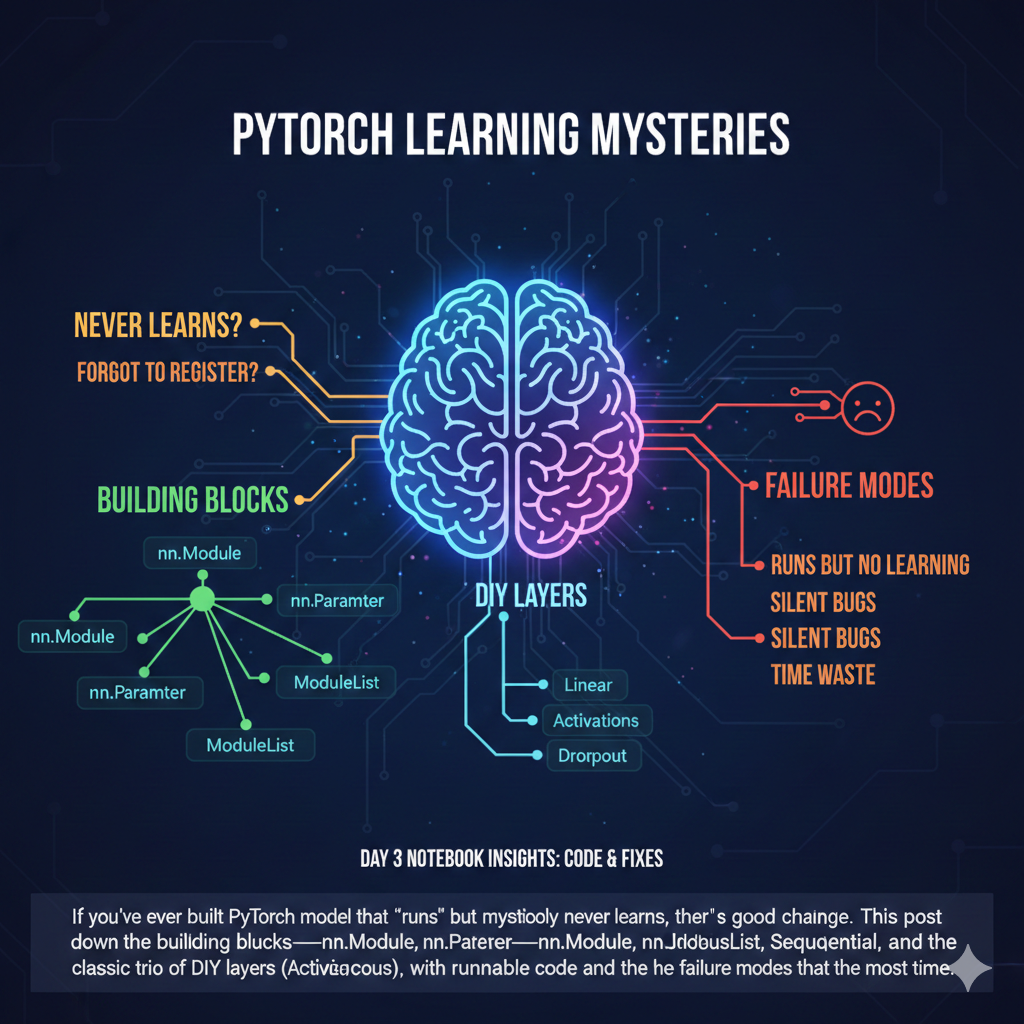
If you’ve ever built a PyTorch model that “runs” but mysteriously never learns, there’s a good chance you forgot to register somet...
PyTorch’s autograd isn’t magic—it’s a graph recorder plus a brutally practical reverse traversal. In this post I walk through how...
I built a PyTorch notebook to kill the two most common time-wasters - shape bugs and confusing gradients - using assertable tensor...

Tired of fragmented data stacks killing your AI projects? This roadmap is a candid, technically insightful guide through the Datab...

The AI apps work non deterministically based on their artificial intelligence. To ensure decision making is robust and reliable in...

Hosting Llama 3 70B on your own GPU cluster isn’t just about bragging rights—it’s about unlocking the freedom to tweak, experiment...

Imagine a world where machines don’t just follow commands but converse, create, and problem-solve alongside humans. This isn’t sci...

In this study, we'll do a comprehensive exploration of FlashMLA’s architecture, technical innovations, and real-world impact, with...
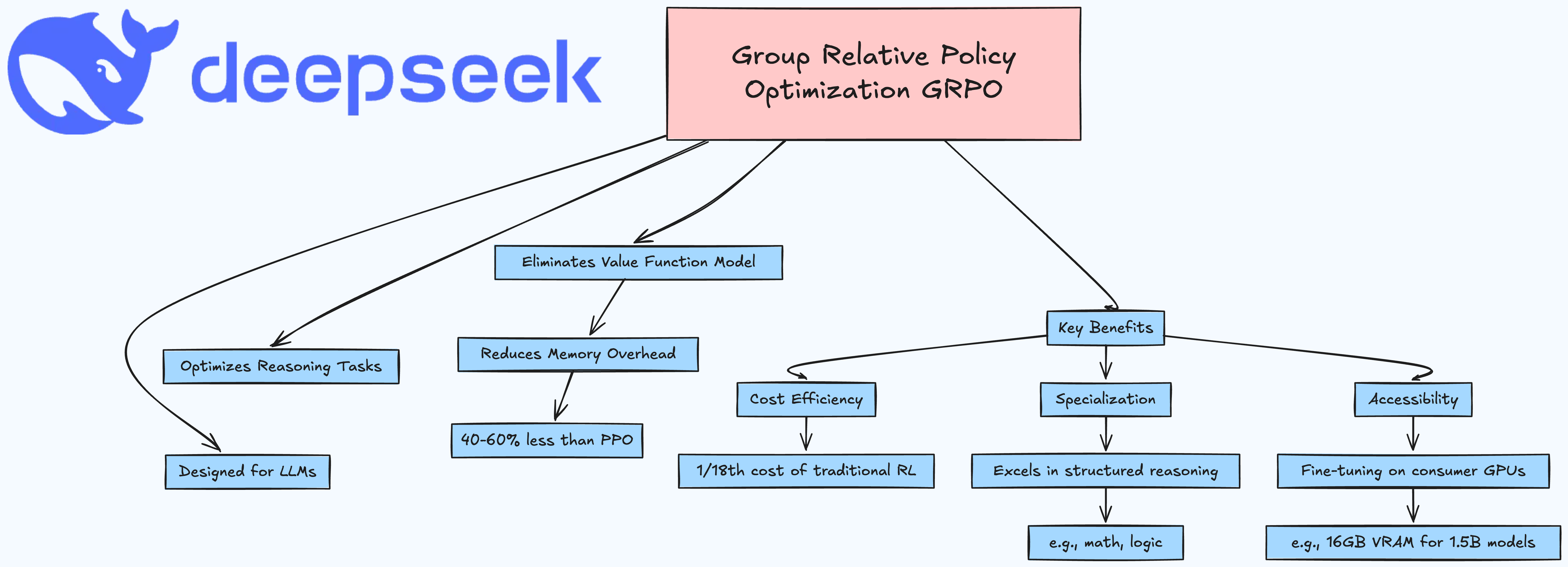
Group Relative Policy Optimization (GRPO) is a reinforcement learning (RL) algorithm designed to optimize large language models (L...